

I would like to thank everybody who has taken the trouble to respond to my last column on Educating Spectroscopists.1 I am very happy that Ian has allowed me space to reproduce some of them in this edition.
Articles and Columns
Pages
Where is the accreditation of analytical laboratories taking the reference material producer industry? I’ve recently been cogitating the long term impact of the growing spread of ISO 17025 accreditation on the development and supply of certified reference materials and I’m concerned that the “quality business” is driving laboratory accreditation into areas where reference material producers will be under increasing pressure.
Following on from our previous foray into the UV-visible area of the spectrum, in this article we discuss its nearest neighbour in the spectral scale, namely near infrared (NIR) spectrometry. The NIR spectral region lies between 780 nm and 2500 nm (4000 cm–1 to 12,800 cm–1) bridging the more well-known and analytically used regions of the UV-visible (190–780 nm) and the infrared (4000–600 cm–1).
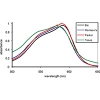
This short review shows that UV/visible spectroscopy plays a key role in the discrimination of colour in the forensic analysis of fibres and inks. The application of chemometrics, however, is vital in many cases to enhance such discrimination and to put it on a quantitative basis so providing objective justification for the conclusions of the analyst.
In 2007 we introduced our method in Spectroscopy Europe describing the identification of furs by hair digest based matrix-assisted laser desorption/ionisation time of flight (MALDI-ToF) mass spectrometry (MS). This so-called SIAM (Species Identification of Animals) method can also be used for the species determination of ancient furs.
In the previous version of this column, Tony Davies (the younger) was being controversial about education and in this issue, I am being controversial about one of the current applications of chemometrics to the use of spectroscopy in industry.
Christopher Burgess
Burgess Analytical Consultancy Limited, “Rose Rae”, The Lendings, Startforth, Barnard Castle, Co. Durham, DL 12 9AB, UK
John Hammond
Starna Scientific Ltd, 52–54 Fowler Road, Hainault Business Park, Hainault, Essex, IG6 3UT, UK/p>
The Foundation for Analytical Science & Technology in Africa (FASTA) is a charitable company that was established in 2005 in response to a request to provide a GC-MS to the Jomo Kenyatta University of Agriculture & Technology (JKUAT) in Nairobi, Kenya. FASTA was founded by Steve Lancaster of BP and Barrie Nixon of Mass Spec UK Ltd. The objectives of the organisation are to support scientific education, analytical research and the preservation of the environment in Africa via capacity-building and technology transfer.
The scientific study of fluid inclusions goes back to the middle of the 19th century. Geochemists have sought for years to find techniques that would allow them to analyse the contents of these small liquid bubbles, but the challenge is formidable. After the progressive development of techniques that yielded results for optimal samples, Laser Ablation Inductively Coupled Plasma Mass Spectrometry has at last provided a means of analysing individual fluid inclusions in typical, rather than exceptional, samples.
In the present study, operando infrared (IR) spectroscopy was used to investigate under realistic conditions the oxidation activity of Pt and Pd supported on different oxides, with the aim of generating mechanistic information that will be used for the design of improved formulations.
Now maybe I’m going to be a little controversial in this month’s column and I might just touch a nerve in the readership. If you are of a nervous disposition or are easily upset, this column may damage your health! However, I can’t stop worrying about the miss-match between what we teach undergraduate students about spectroscopy and what they will be expected to understand about our subject when they finally end up in gainful employment.
Peter J. Jenks
the Jenks Partnership, Newhaven House, Junction Road, Alderbury, Salisbury, Wiltshire SP5 3AZ, UK. E-mail: [email protected]
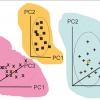
In our previous column we introduced CVA, one of the very early applications of multivariate analysis (1930s). In this column we will discuss SIMCA (officially it is Soft Independent Modelling of Class Analogies, but no one uses the long form!). SIMCA was invented 30 years later by another pioneer, Svante Wold (the man who coined the word “chemometrics”).
This article discusses matrix-assisted laser desorption/ionisation (MALDI) enabled linear ion trap (LIT) mass spectrometry (MS) as a technique for fast and accurate tissue imaging, compared to the more traditional time-of-flight (ToF) method.

Scientific studies of artworks are an important practice in many institutions dedicated to the study and protection of cultural heritage. Applied physics and chemistry provide the scientific data necessary to characterise and understand the origin, the degradation processes and the environment in which the artwork was created or has existed.
It is shown here that NIR reflection spectroscopy is able to follow even small variations of both the conversion and the thickness of thin coatings and that it accordingly can be used as an efficient in-line measuring method.
Our laboratory has received several requests from public or private institutions to solve problems related to conservation and restoration of samples from cultural heritage. A brief description of the FT-IR methodologies used to solve some of them are detailed within this article.
Lead exposure is an international issue. Pb may enter biological systems (as Pb2+) via food (e.g. food contaminated from cans containing Pb solders in the joints), water (e.g. use of lead pipes), air and soil (the combustions of leaded fuels have contributed to the accumulation of atmospheric and soil Pb). In the USA, the major source of ingestion in young children seems to be the dust and chips originating from old lead paint (used from 1884 to 1978).1 Foetuses and very young children (up to 36 months of age) are more sensitive than adults to relatively high blood lead levels because their brains and nervous systems are still developing and their blood-brain barrier is still incomplete. Childhood lead exposure has been correlated with school absenteeism, low class ranks, poorer vocabulary, longer reaction times and diminished hand-eye coordination, among other neurobehavioural disorders.
As the column title rightly suggests Quality does Matter. The authors look at the major changes that have taken place over the last 50 years in four key areas: The National Metrology Institutes (NMIs), the instrument manufacturers, the user base and the globalisation of regulation through international regulatory bodies.
Inductively coupled plasma-mass spectrometry (ICP-MS) was introduced commercially in 1983 as a very sensitive analytical technique to be deployed for (ultra)trace element analysis. Compared to the previously existing techniques of atomic absorption spectrometry (AAS) and ICP-optical emission spectrometry (ICP-OES), the main advantages offered by ICP-MS over these techniques were its pronounced multi-element capabilities and substantially higher detection power, respectively.