
News
Near Infrared (NIR) News

A small group of plants known as “resurrection plants” can survive months or even years without water. NIR spectroscopy and aquaphotomics have made a significant step forward in understanding how they do it.
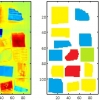
Plastics recycling is complicated by the need to recycle similar plastics together. The presence of flame retardants in plastics also needs to be identified, and NIR hyperspectral imaging can do this.
A miniature food scanner based on NIR spectroscopy will allow consumers and supermarket operators to determine the ripeness and shelf life of produce and display the results via an app.

The NeoSpectra-Micro chip-scale, near infrared spectral sensor has been customised for use in Henkel Beauty Care’s Schwarzkopf Professional SalonLab Smart Analyzer for hairdressers.

BASF hopes that an infrared sensor developed by a spin-off company will be integrated into smartphones by 2022 and provide NIR analysis of food by consumers.
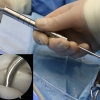
An arthroscopic near infrared spectroscopic probe for evaluation of articular cartilage and subchondral bone structure and composition could improve early detection of cartilage lesions.

Outdoor bronze statues suffer from corrosion by the urban atmosphere. Short wavelength infrared hyperspectral imaging can determine the spatial distribution of corrosion products on the statue, none of which can be recognised by visual observation.

Metrohm AG has acquired B&W Tek’s Spectroscopy Solution business, B&W Tek LLC, as well as several overseas subsidiaries.
NIR spectroscopy has been shown to be a cheap and effective tool that could save lives by helping health authorities target mosquitoes infected with Zika virus.

The winner of the 2018 Tomas Hirschfeld Award is Professor Christian Huck.
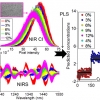
The final step in pharmaceutical production is often tableting. Near infrared chemical imaging can be used to monitor inconsistencies in the powder that will become the tablet, which have been introduced by mechanical processes in the tableting equipment and can lead to out of specification tablets.
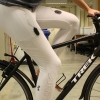
Smart garments using embedded near infrared spectroscopy sensors are being developed at the University of British Columbia.
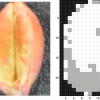
NIR hyperspectral imaging can be used to control the addition of seed treatment products to monitor dosage levels and coverage.

Observing the crucial first few femtoseconds of photochemical reactions requires tools typically not available in the femtochemistry toolkit. Such dynamics are now within reach with the instruments provided by attosecond science. In a study published in Nature Communications, researchers from Max Born Institute for Nonlinear Optics and Short Pulse Spectroscopy (MBI) characterise one of the fastest internal conversion processes in a molecule studied to date.
PANalytical has appointed Aimil Ltd as the authorised representative for ASD NIR products in India.
The WADI project is using hyperspectral, multispectral and thermographic infrared imaging to detect soil moisture and those leaks from water mains in rural areas.

The 2017 Tomas Hirschfeld Award has been made to Satoru Tsuchikawa of Nagoya University, Japan.
Given the increase in food-related health problems, the challenge set for the EU Horizon’s Food Scanner prize of €1 million was to develop an affordable and non-invasive mobile solution that enables users to measure and analyse their food intake.
On 15 March Ghent University officially launches a prestigious research project on precision agriculture, led by Abdul Mouazen.
Analytik have been appointed as exclusive distributors for the NeoSpectra range of low-cost, miniaturised, OEM FT-NIR spectral sensors.